
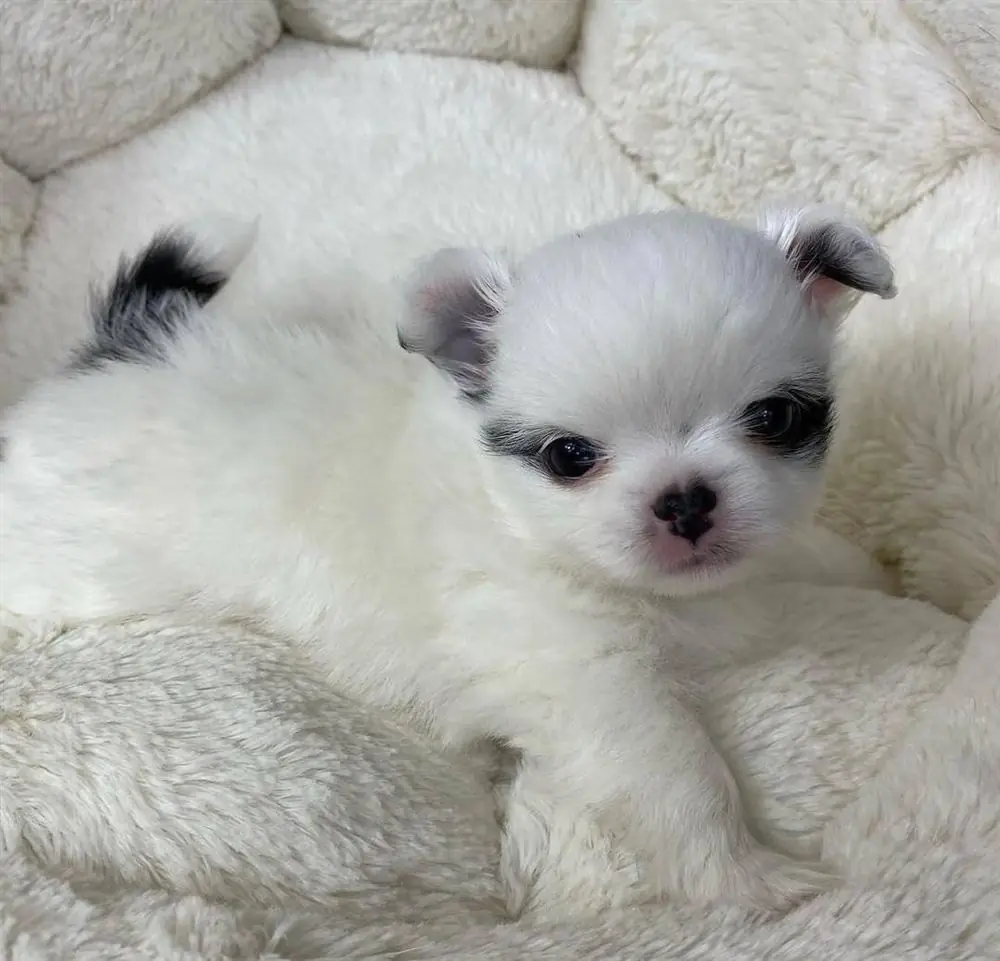
AvailableTeacup size
Willow
- Age
- 8 weeks
- Gender
- Female
- Coat
- Long coat
- Est. adult weight
- 3 to 3.5 lbs
- Price
- $700
Chihuahuas come in more colors than almost any other breed, and every color we raise is born in our family home in Minneapolis, then flown in the cabin or collected by families across the country. Below are the puppies we have now, with their colors in the listings. After that, a breeder's view of what each color looks like as a grown dog, because a coat at 8 weeks is only a first draft.
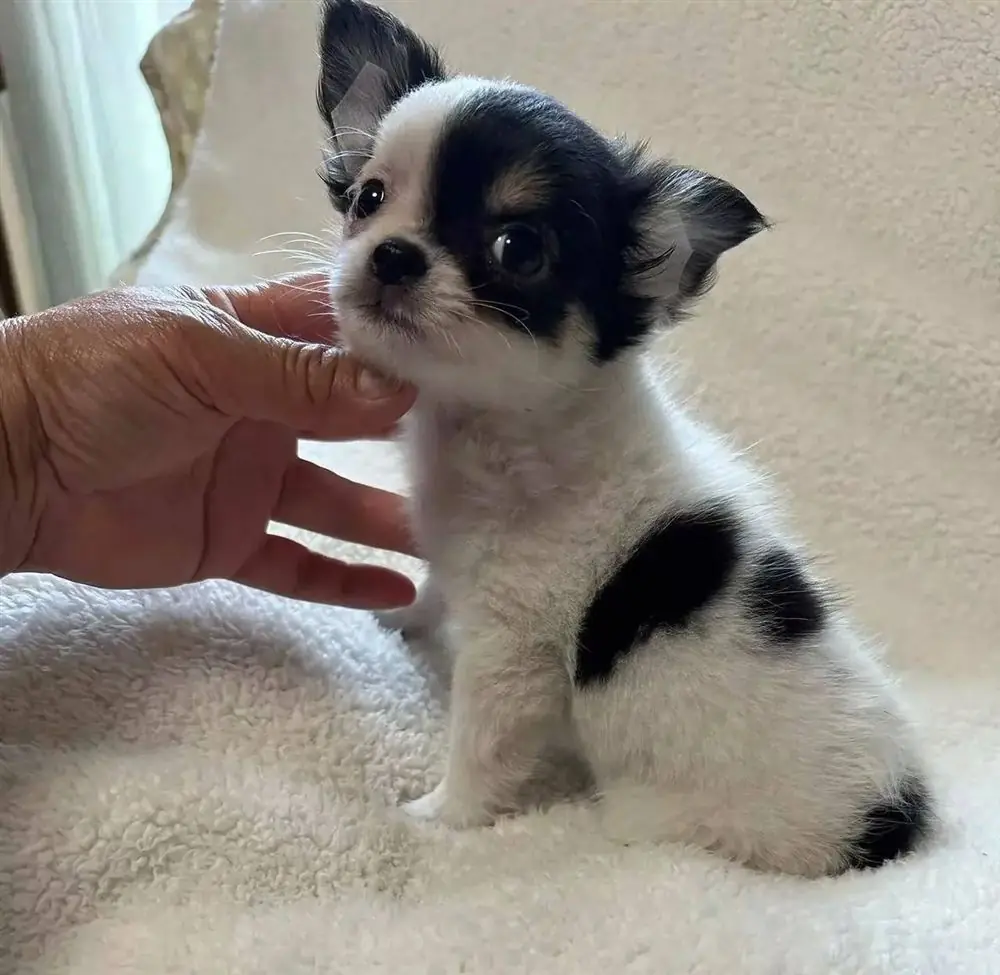
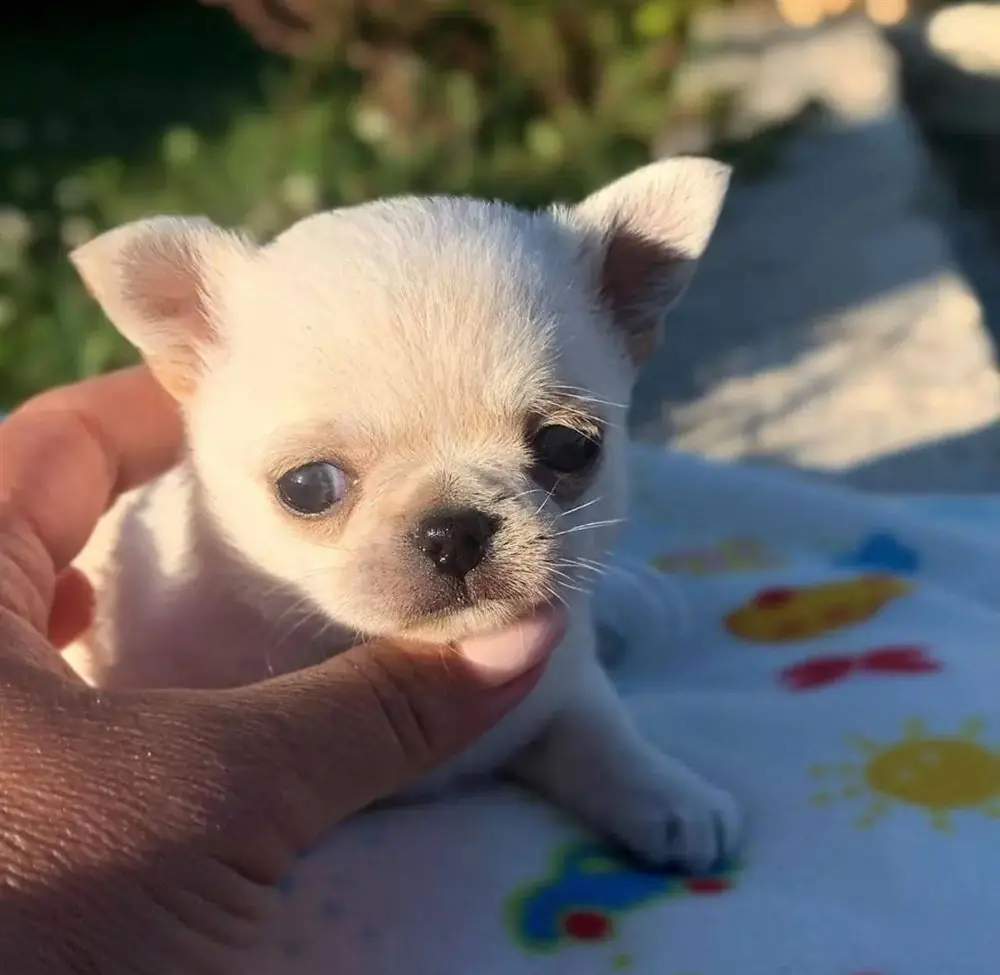
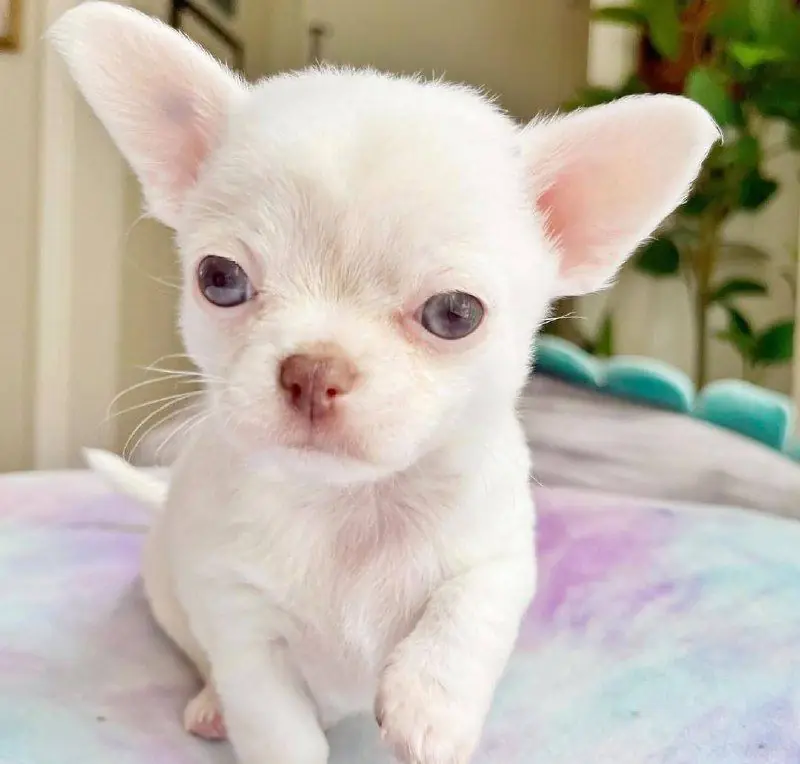
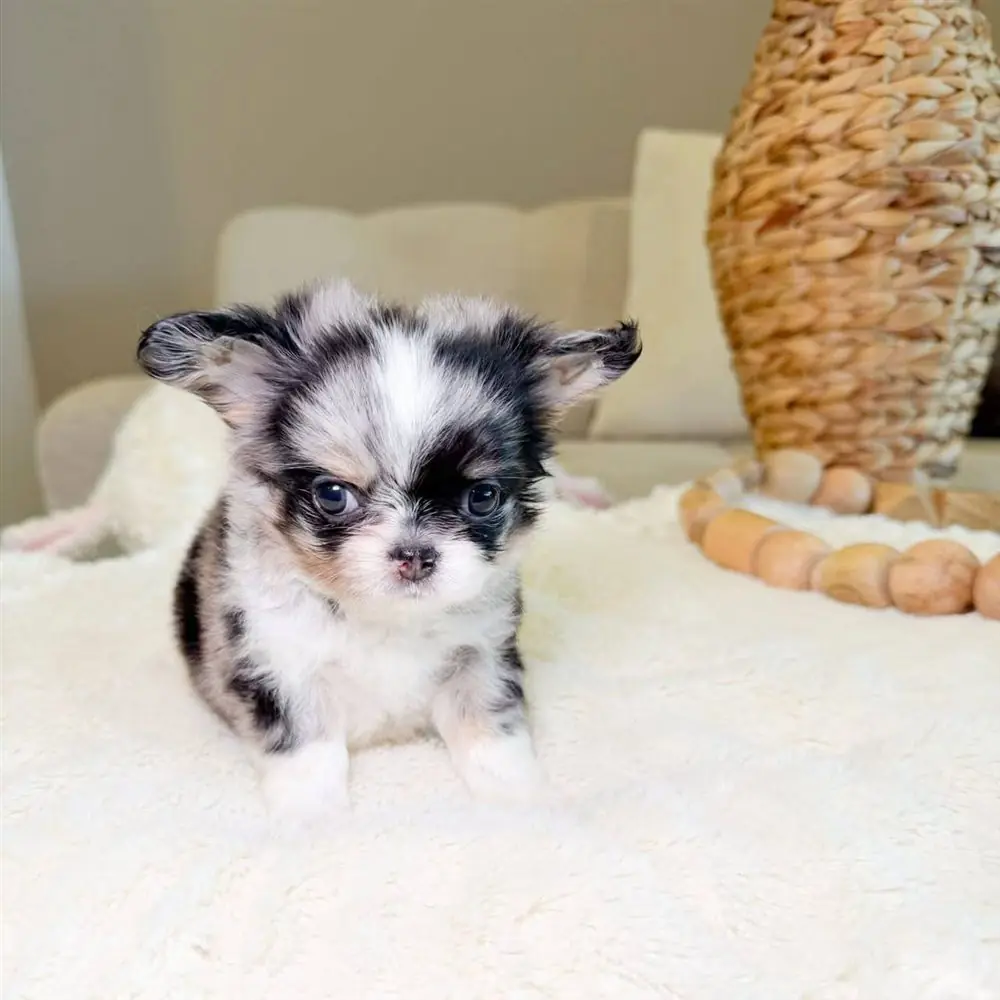
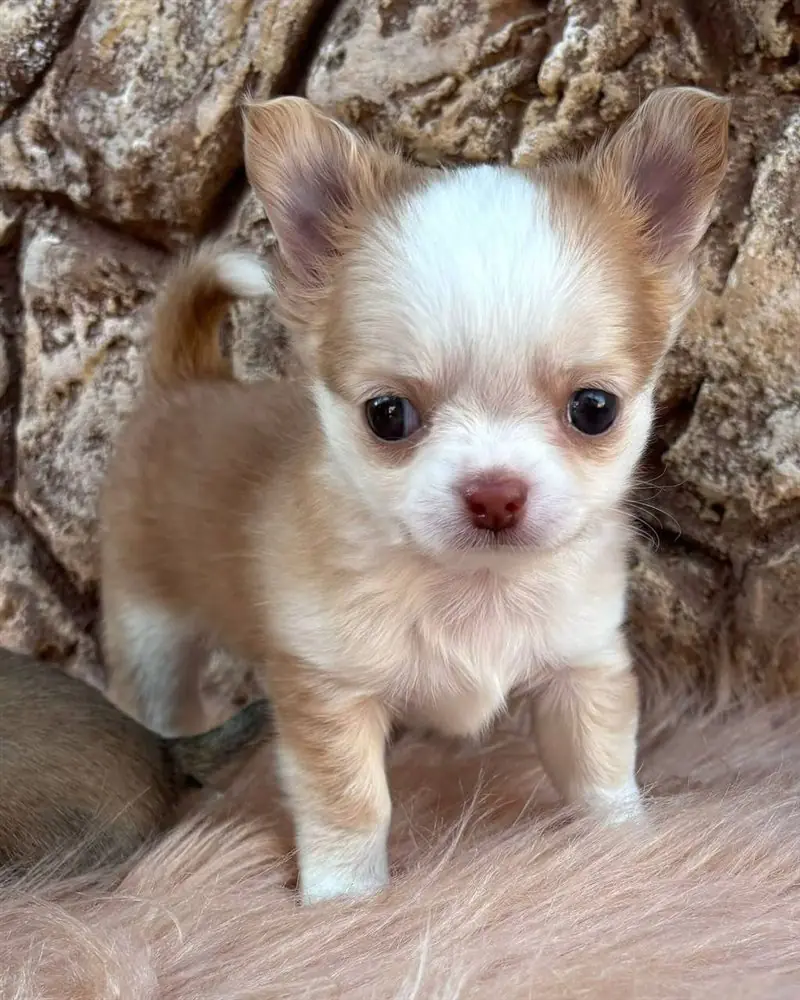
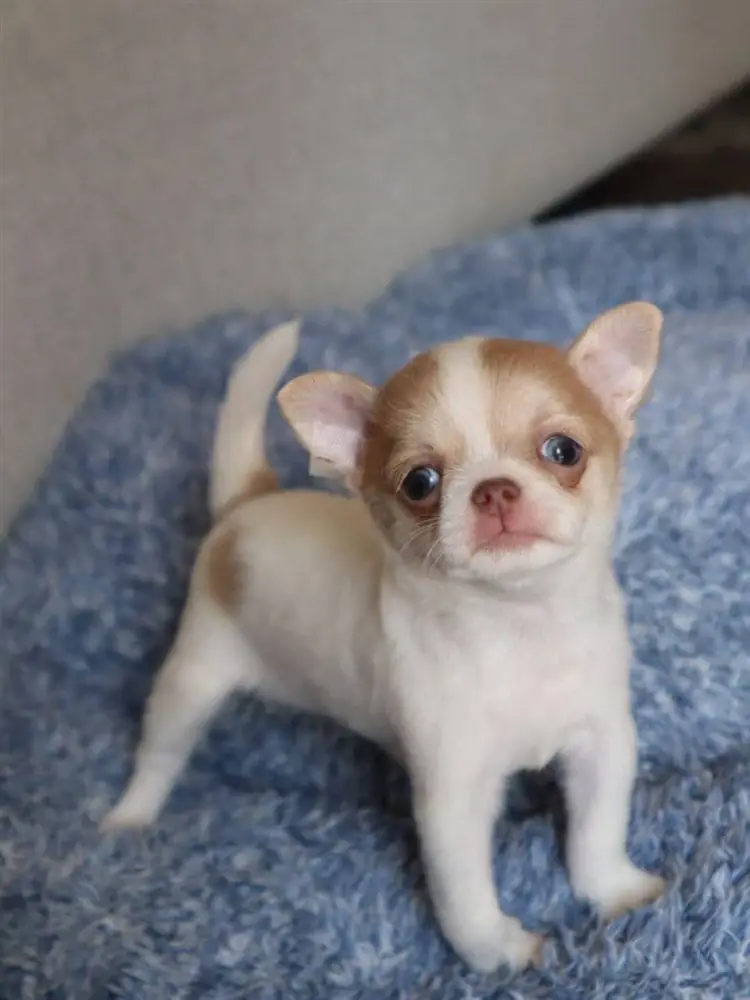
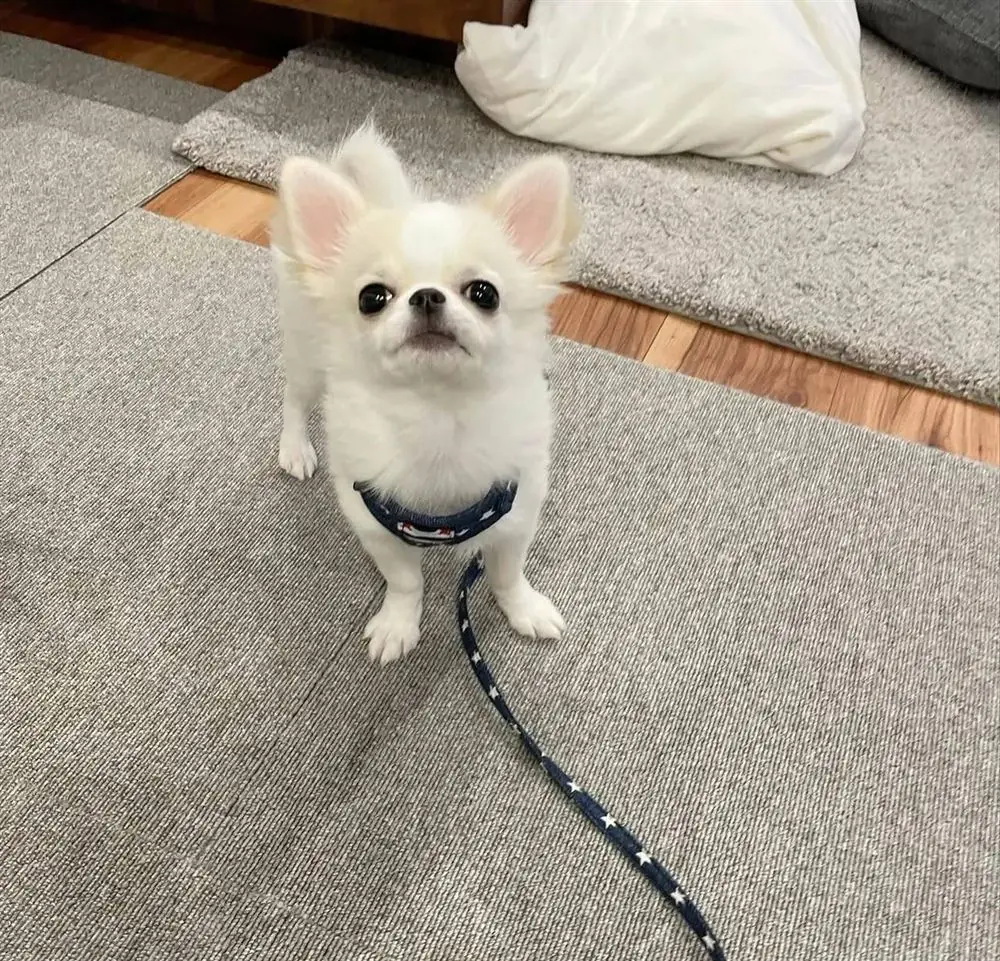
Our recent litters have produced white, cream, black and white, fawn and white, and blue merle and white puppies. Our parent dogs include a black and tan, a fawn and white, and a chocolate and tan, so those colors can turn up too. Here is how the common colors usually change from puppy to adult.
| Color | At 8 weeks | As an adult | What to watch |
|---|---|---|---|
| White | Clean white, pink skin on the belly | Stays white, sometimes a faint cream tint on the back | Tear staining, sunburn on pale skin |
| Cream | Pale, almost white | Usually a shade or two warmer by age one | Tear staining |
| Fawn | Light gold, often with dark hair tips | Pale gold to deep red | Exact shade hard to predict early |
| Black and white | Crisp black patches on white | Very little change | Easiest color to predict |
| Black and tan | Black with tan points on face and legs | Tan points often brighten | Tan can spread a little |
| Chocolate | Warm brown, brown nose | Can lighten slightly in strong sun | Brown, not black, eye rims |
| Blue merle | Gray and black marbling on a lighter base | Same pattern, gray often softens | Ask about both parents' colors |
White Chihuahuas are among the most requested puppies we raise. A good white has a black nose and dark eye rims, which give the face its expression and protect the skin around the eyes from the sun. Cream is close, with a warmer tone that usually deepens a touch by the first birthday. Both show tear stains more than darker coats, so we tell every white Chihuahua family to wipe under the eyes daily with a damp cotton pad. A white long coat is especially striking; our long haired Chihuahua puppies page shows the long coats we have now.
When families ask us for a black Chihuahua for sale, they usually mean one of three looks: solid black, black and tan, or black and white. Black and white is the easiest color of all to predict, since what you see at 8 weeks is very close to what you will have at 8 years. Sellers often call it piebald or parti. Those are descriptions, not separate types, and with us they cost nothing extra.
Black and tan Chihuahuas carry tan points over the eyes, on the cheeks, chest and legs. The tan often brightens as the adult coat grows in. Solid black is the least common of the three, and a black puppy for sale with no white or tan at all is worth asking twice about, because many photos online are edited or stolen.
A chocolate Chihuahua has a brown nose and brown eye rims, never black. The coat is a warm brown that can lighten a little in strong sun. Chocolate comes from a recessive gene, so both parents must carry it. A brown Chihuahua puppy for sale with a black nose is usually a fawn or red, not a true chocolate, so check the nose before you fall for the description.
A blue Chihuahua has a soft gray coat and a gray nose, and like chocolate it needs both parents to carry the gene. Blue merle is different: a marbled pattern of gray and black patches laid over a lighter base, and no two look alike. We do not pair two merles, because double merle puppies carry a high risk of deafness and eye problems.
Brindle means dark stripes over a fawn or red base, a bit like a tiger's coat. It is one of the less common patterns in the breed, and we do not have a brindle puppy right now. If brindle is your color, tell us, and we will let you know honestly whether any coming pairing could produce one. Our upcoming Chihuahua litters page shows what is planned.
Have a favorite color, by all means, but make it your second filter, not your first. A Chihuahua litter is usually two to four puppies, and the one whose personality suits your home best may not be the shade you pictured. Color also costs nothing extra with us: every puppy is $700, white or fawn, merle or black and white, teacup or toy size.
Our guide to Chihuahua coat colors and patterns goes into the genetics in more depth. To see every puppy with all its photos, visit our teacup Chihuahua puppies for sale page, or read about Twin Cities Chihuahuas, our home breeding program. When you send the free puppy application, give us a first and second color choice and tell us how flexible you are. We will contact you within 24 hours.
Often, a little. Fawn and cream puppies usually warm up or gain darker hair tips by their first birthday. Black and white puppies change very little. Merle patches can soften, and the pale areas of a long coat can lighten as the adult hair comes in. Markings stay where they are; the shades are what shift.
Not from us. Many sellers charge extra for white, blue or merle, and we think that pushes breeders to chase color over health. Every puppy we raise is $700, so a white puppy, a blue merle and a fawn all cost exactly the same, whatever their coat or size.
Solid black, with no white or tan at all, is less common than black and tan or black and white, which most people picture when they say a black Chihuahua. Black puppies usually hold their color well into adulthood. If you want black in particular, tell us on your application, and we will tell you honestly which coming pairings could produce it.
A merle puppy from one merle parent and one non-merle parent is generally as healthy as any other Chihuahua. The risk comes from pairing two merles, which can produce double merle puppies with a high chance of deafness and eye problems. We do not pair two merles. Ask any seller of a merle puppy for the colors of both parents.
Not at the moment. Brindle, dark stripes over a fawn or red base, is one of the less common Chihuahua patterns, and none of our current puppies carry it. Head shape, coat and color all vary litter to litter, so if brindle is what you want, mention it on the application and we will let you know if one is born.