
About Twin Cities Chihuahuas: A Family Chihuahua Breeder in Minneapolis
We are Twin Cities Chihuahuas, a small family breeder in Minneapolis, Minnesota. We keep Chihuahuas, we breed only Chihuahuas, and every puppy we place is born and raised inside our own home. This page is about who we are, what we believe a breeder owes a family, and how a litter grows up with us.
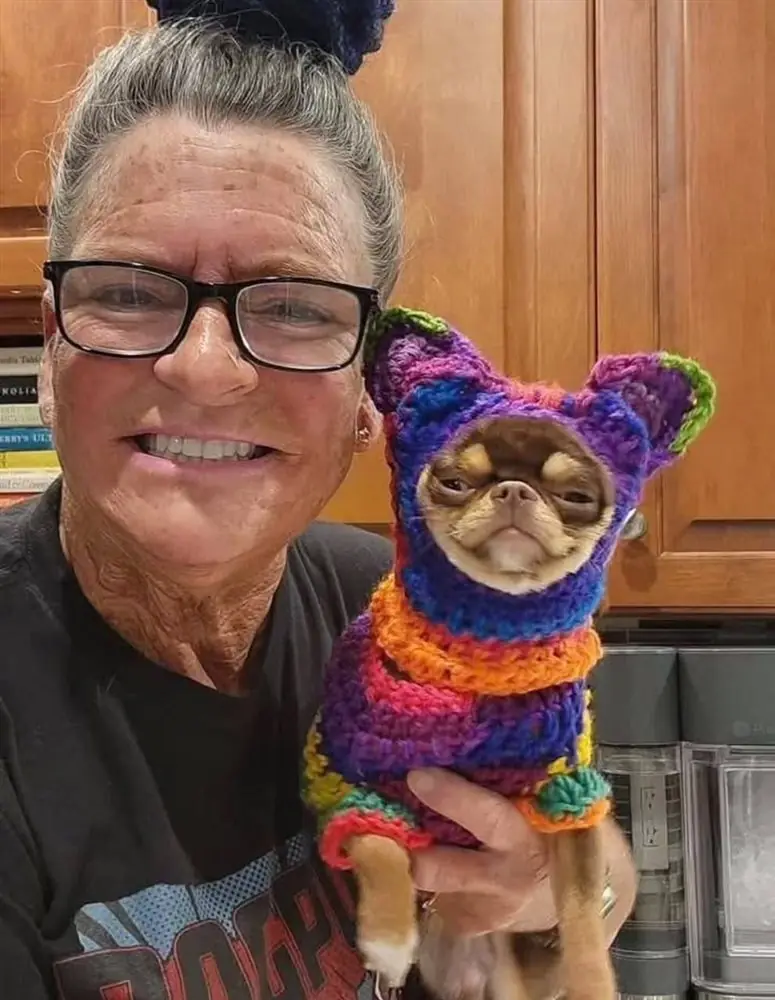
Who We Are
We are a family, not a kennel business. There is no kennel manager, no sales team and no building out back. Our adult Chihuahuas live in the house with us, sleep where we sleep and come along in the car. When you send an application, it is read by the same people who weighed your puppy that morning, and those are the people you will talk to from the first message until long after your puppy is home.
We do not buy puppies in to resell, and we do not broker litters for anyone else. If a puppy is listed on our site, it was born here, to one of our own dogs.
Why We Breed Chihuahuas Only
One breed lets us know it properly. We know what a healthy Chihuahua newborn should gain in a day, how a long coat changes between 8 weeks and 18 months, and how differently a 3 pound adult and a 5 pound adult handle a missed meal or a jump off the sofa. A breeder juggling five breeds cannot watch that closely. We would rather do one thing carefully than many things quickly.
What We Believe a Breeder Owes a Family
Our view is simple: a breeder should make every claim easy to check. So before a family commits, we show them each puppy's price, age, current weight and our estimate of its adult size. We share the parents' adult weights and health records. Our written health guarantee, puppy contract and deposit policy are published for anyone to read. And we tell families plainly when a puppy is wrong for their home, even if it means they wait for the next litter.
We also believe a puppy this small should never travel alone. Puppies leave us by pickup at our home, with someone the family trusts, or in the airplane cabin with one of us from MSP to the family's airport. Never as cargo, and never with a hired transporter. Our puppy delivery page explains how that works.
Our Home in Minneapolis and How Puppies Live in It
Our litters are born in a quiet back room and grow up in the busiest room we have, the kitchen. That is deliberate. A Chihuahua that hears the dishwasher, the doorbell, footsteps and conversation every day for weeks arrives at your house already used to ordinary life. Through a Minnesota winter we keep a close eye on room temperature, because a cold puppy stops nursing well long before it looks unwell. For the full picture of our dogs and the sizes we raise, see our page on our Minneapolis Chihuahua breeding program.
How We Raise Our Puppies, Week by Week
| Age | The puppies | What we do |
|---|---|---|
| Birth to 2 weeks | Eyes closed, nursing and sleeping | Daily weights, warm whelping box, every feed watched |
| 3 to 4 weeks | Eyes open, first steps | Move to the kitchen pen, first handling, first soft food |
| 5 to 6 weeks | Playing, eating mash | Pad area, new surfaces and toys, deworming |
| 7 to 8 weeks | Eating soaked kibble alone | Visitors, brushing, nail trims, short car rides |
| 8 to 12 weeks | Ready to leave; teacup size later | Vet check, vaccines, microchip, registration papers, go-home bag |
The first two weeks
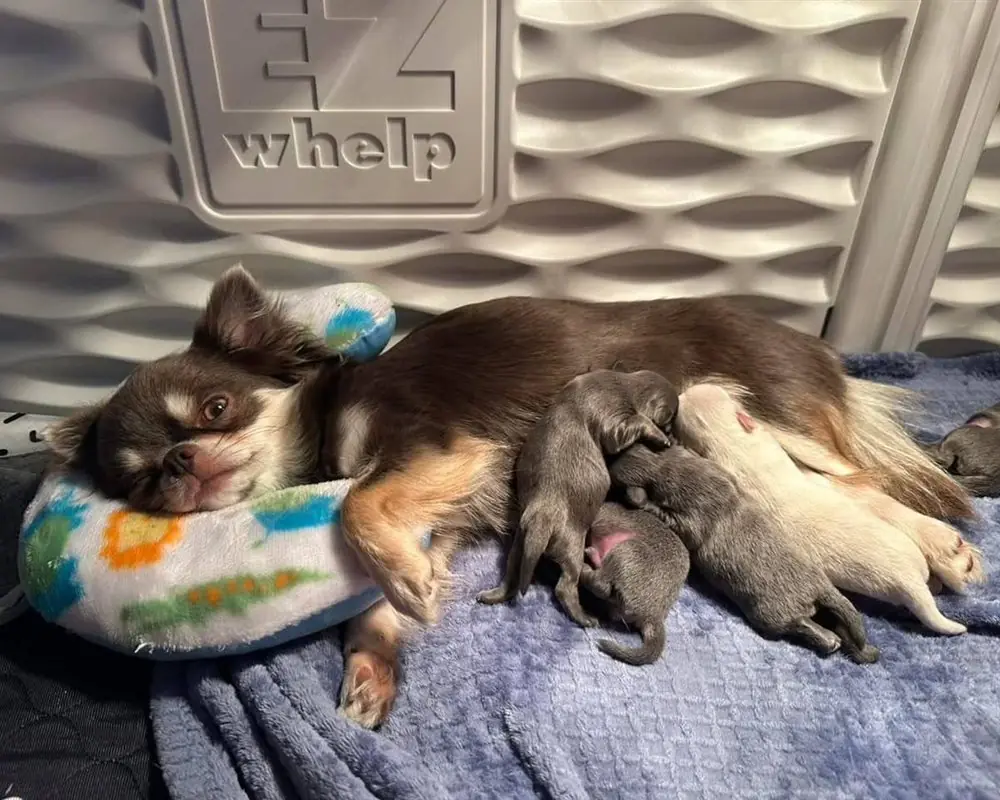
A newborn Chihuahua can weigh less than 4 ounces and cannot hold its own body heat, so for these two weeks one of us is always within earshot, nights included. Every morning each puppy goes on a gram scale and the number goes into its own log. A healthy newborn gains daily; one that stalls gets help that same day.
Weeks three to five
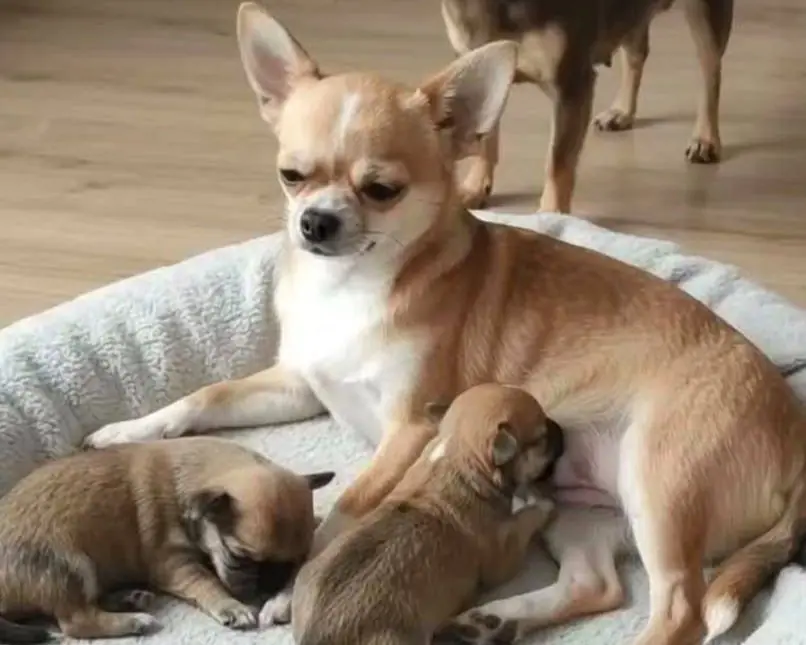
Eyes open at around two weeks, and soon after the litter moves to the kitchen pen. Each puppy is picked up several times a day, paws and ears touched, mouth gently opened, then set back with its littermates. At about four weeks we offer soaked small breed kibble while the mother keeps nursing, and we read the daily weights even more closely, because weaning is when a tiny puppy most often slips.
Weeks six to eight and go-home day
The litter gets a pad area at the far end of the pen, meets new floors, a carrier and the vacuum, and is brushed and nail-trimmed. Before any puppy leaves, our vet examines it, and it gets a microchip and its vaccines and deworming for its age. It goes home with the food it already eats, Nutri-Cal or glucose gel, its daily weight log and a blanket carrying its litter's scent. Most leave at 8 to 10 weeks; teacup size puppies usually stay until 10 to 12 weeks. Our guide to low blood sugar in Chihuahua puppies explains why we will not rush that.
Meet a Puppy of Ours
See who is in our house today on our Chihuahua puppies for sale page, look ahead to upcoming litters, or send the free puppy application. We contact every family within 24 hours.
Questions Families Ask About Us
Is Twin Cities Chihuahuas a kennel or a home breeder?
A home breeder. Our Chihuahuas live in our house in Minneapolis, our litters are born in a whelping box in a quiet room, and the puppies grow up in a pen in our kitchen. There is no kennel building and no staff. The people who raise your puppy are the people who answer your application.
Do you resell puppies from other breeders?
No. Every puppy we place was born in our home to one of our own dogs and raised here until it left. We breed Chihuahuas only. If a seller cannot show you where a puppy was born or tell you the adult weight of both parents, that is a reason to keep looking, whoever the seller is.
Can I visit your home before choosing a puppy?
Yes, by appointment, Monday to Saturday, 10 a.m. to 6 p.m.. You will see where the litter lives, meet the mother and usually watch a feeding. We share the address once the visit is booked. Families too far away to visit can call (646) 463-2052 and we will go through a puppy's weight log and records with them.
When do your puppies go home?
Most leave at 8 to 10 weeks. Teacup size puppies usually stay until 10 to 12 weeks, until they eat confidently on their own. A puppy leaves when it eats well alone, holds its weight between meals and has had its vet check, microchip and vaccines for its age, not simply because a date arrived.